
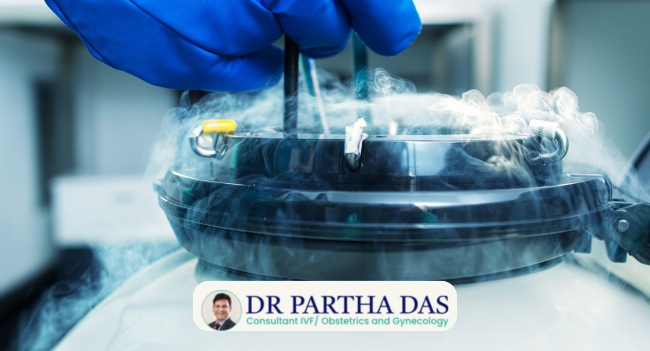
The question “How long can frozen sperm remain viable?” is one of the most frequently asked questions regarding sperm cryopreservation (or sperm freezing). As such, it is important to know when you are freezing your sperm for medical reasons (for example, due to a cancer diagnosis), for personal reasons (career), or for future family planning -related needs.
With recent advancements in technology, it has been found that with current examples of cryopreservation, the sperm will remain viable and able to produce offspring for many, if not all, of your future cycles and/or years after they have been preserved. This article discusses how long frozen sperm maintains its ability to reproduce, what affects how long frozen sperm is properly preserved, and how effective sperm preservation technologies function.
The length of time that a sperm cell can be preserved in the frozen state depends more on how it was stored than on how long it has been in that state. Biological activity halts whenever sperm cells are frozen correctly at very low storage temperatures. Therefore, the potential longevity of sperm cells stored in this manner is virtually limitless in terms of quality of the sperm.
Studies and clinical experiences are showing that sperm can continue to be used as a viable option after years (or even decades!) of being stored frozen, making cryopreservation one of the best methods for preserving male fertility on a long-term basis.
The frequently asked question on the duration of time that frozen sperm remains viable is often misunderstood; in fact, frozen sperm can survive indefinitely as long as the storage conditions are kept constant. Therefore, people tend to ask, “Will my frozen sperm spoil?” The answer is that frozen sperm do not “spoil” solely due to the amount of time they have been frozen; However, the quality of the frozen sperm does depend on how well they were frozen, handled during freezing and thawed prior to use.
While the length of time sperm can be frozen biomechanically is unlimited, the length of time it can be frozen will be determined by how well it is maintained in storage. Several clinics throughout the world have frozen sperm for 10, 20 and more than 30 years. Therefore, from the above, we can see that, when correctly following cryopreservation protocols, sperm can be frozen for up to several decades.
The benefits of sperm freezing will therefore be particularly useful to men with cancer, men who wish to put off having a child until they are older, people changing their gender or undergoing primary gender affirmation therapies, and individuals with declining semen quality.
Time limits on storing sperm are determined by both how well the sperm is stored and the quality of laboratory expertise. Studies on frozen sperm used for assisted reproductive technologies (IVF/IUI) have shown that the length of time frozen has not affected success.
Therefore, frozen sperm may be cryopreserved indefinitely without loss of fertility potential when performed according to adequate protocols.
A common concern for many individuals is the aging of frozen sperm samples before thawing. In other words, do frozen sperm expire? No, time does not affect the functionality of frozen sperm. Once sperm has been frozen, it remains frozen until it is thawed.
The success of the sperm sample upon fertilization will not decrease through storage duration. Instead, there are typically two main factors influencing the chances of success with frozen sperm — the quality of the sperm at the time of freeze and the processes used during the thawing process — neither of which relates directly to the length of time that the semen was stored.
Individuals can plan parenthood around their timelines due to the understanding of how long frozen sperm lasts. The flexibility of freezing sperm gives individuals peace-of-mind and prepares them for possible challenges they may face when trying to conceive.
Freezing their sperm early on, individuals can provide themselves with reproductive choices that will not be limited by their current age or medical situation.
When thinking of storing sperm, you want to ensure that you find a skilled professional for this service. Dr. Partha Das is one of the most experienced fertility doctors and is well known for his ability to preserve and freeze sperm successfully. Dr. Partha Das has a patient-focused philosophy in all facets of his practice by providing a detailed review of the patient’s fertility history, using state-of-the-art laboratory methods, and planning for long-term sperm preservation.
Dr. Partha is dedicated to providing his patients with the highest quality of care, utilizing the most up-to-date evidence-based protocols that promote the best possible chance for successful sperm cryopreservation, including safe preparation for freezing, secure freezing storage, and eventual retrieval of viable sperm from frozen storage. His commitment to ethical practices and advanced reproductive technologies will help you understand the options available for preserving your fertility through sperm freezing.
If you’re interested in learning more about sperm freezing and fertility preservation, check out https://drparthadas.com/.
Sperm can stay frozen for decades when stored under proper cryopreservation conditions.
Frozen sperm does not expire and can remain viable indefinitely if storage remains stable.
Sperm freezing duration refers to how long sperm remains stored, which can extend for many years without loss of quality.
No, frozen sperm does not expire due to time alone.
There is no fixed limit; sperm has been successfully used after 20–30 years of storage.
Sperm can be stored safely for long periods as long as cryogenic conditions are maintained.

Dr Partha Das is a highly skilled fertility/IVF Physician specializing in Reproductive Endocrinology and Infertility. Dr Partha consults and manages patients presenting with complex gynecological, male and female infertility issues and management of recurrent miscarriage and IVF failures.